


You walk into a room and your eyes immediately go to the floor. The rug anchors the space, adding warmth and character that furniture alone cannot achieve. But when you look closer, you might wonder why one rug lasts for generations while another frays within a few years. The answer usually hides in plain sight: the knots.
Understanding how a rug is made separates a smart purchase from a regretful one. Hand knotted rugs are not just decor; they are investments in art and history. The technique, density, and material of the knots dictate how the rug feels, how long it lasts, and how clearly the pattern shines through.
At The Ambiente, we believe a rug determines the atmosphere of a living space. With roots in Bhadohi, India’s hub of handmade carpets, we blend traditional craftsmanship with modern needs. This guide breaks down exactly how knotting techniques change the quality of a rug, so you know exactly what to look for when you shop.
What Are Hand Knotted Rugs?
A hand knotted rug is exactly what it sounds like. A skilled weaver ties individual knots onto a vertical warp (the foundation threads) one by one. This is a slow, painstaking process. It differs entirely from hand-tufted rugs, where a machine shoots yarn into a canvas backing, or machine-made rugs produced by power looms.
Because the pile is tied directly to the foundation, these rugs possess incredible durability. They don’t rely on glue to hold the fibers together. This construction method allows Hand Knotted Rugs to withstand heavy foot traffic and last for decades, often becoming family heirlooms.
The Two Main Knot Techniques
Not all knots are the same. Weavers primarily use two types of knots, and knowing the difference helps you identify the origin and style of the piece.
The Persian Knot (Senneh)
Weavers use the Persian knot, or asymmetrical knot, to create intricate, fluid designs. The yarn loops around one warp thread and passes under the next one. This technique allows for a higher knot density and finer details. If you see a rug with curvilinear patterns—think flowing floral motifs or detailed wildlife—the artisan likely used Persian knots. This style is common in rugs from Iran, India, and Pakistan.
The Turkish Knot (Ghiordes)
The Turkish knot, or symmetrical knot, loops around two warp threads. This creates a very secure hold. While it creates a incredibly durable structure, it typically results in a slightly blockier design. You will often find this knot in rugs featuring geometric patterns. It is the standard for rugs originating in Turkey and the Caucasus region.
Both techniques result in high-quality products, but the choice affects the visual style. The Persian knot leans toward artistic detail, while the Turkish knot leans toward robust structural integrity.
Why Knot Density Matters
If you want to judge the value of a rug quickly, look at the knot density. We measure this in Knots Per Square Inch (KPSI). Think of KPSI like the resolution on your television screen. A higher pixel count gives you a sharper image; a higher knot count gives you a sharper pattern.
Low to Medium Density (50-150 KPSI)
Rugs in this range often feature geometric or tribal designs. The lines are bolder and less defined. These rugs feel thicker and coarser underfoot because the weaver uses thicker wool to cover the foundation. They are durable and excellent for casual spaces.
High Density (150-400+ KPSI)
As the knot count rises, the design becomes clearer. Curves look like curves, not steps. To achieve this, the weaver must use finer wool or silk. These rugs take significantly longer to produce—sometimes years for a single piece. The result is a dense, tight pile that resists dirt and wear.
When you look to buy rugs of investment quality, a higher KPSI often indicates higher value, assuming the materials are also top-tier.
Materials and Their Interaction with Knots
The knot is only as good as the material the weaver ties. The interaction between the fiber and the technique defines the final texture.
Wool
Wool remains the most popular choice for hand knotting. It is resilient, naturally stain-resistant, and dyes beautifully. Wool knots expand slightly, filling the gaps in the foundation. This creates a cozy, matte finish. At The Ambiente, we use high-quality wool that stands up to daily life while maintaining a soft hand-feel.
Silk
Silk is fine and strong. It allows weavers to tie incredibly tiny knots, achieving extremely high KPSI counts. Silk rugs shimmer and change color depending on the lighting and the angle you view them from. However, silk is less forgiving than wool. It requires a master weaver’s hand to ensure the tension remains consistent.
Bamboo Silk and Blends
Modern designs often blend wool with bamboo silk. This combination offers the durability of wool with the visual pop of silk. The knots in these rugs create a textural contrast, adding depth to the design without the high price tag of pure silk.
The Role of Artisan Craftsmanship
Machines can mimic patterns, but they cannot mimic the soul of a hand knotted rug. The slight variations in knot tension and color are the fingerprints of the artisan.
At The Ambiente, we work with a network of over 4,000 women weavers in Bhadohi. Backed by the 30-year expertise of our parent company, Bhadohi Carpets, we ensure that the traditional skills passed down through generations find a place in modern homes.
Hand knotting is physically demanding work that requires focus and precision. A single rug represents months of an artisan’s life. When you choose a rug from a reputable source, you support sustainable livelihoods. Our founder, Avani Khandelwal, emphasizes empowering these artisans, ensuring they receive recognition and fair compensation for their expertise. This human element adds intangible value to the physical quality of the product.
How to Choose the Right Rug
Armed with this knowledge, you can shop with confidence. Here is how to apply what you know:
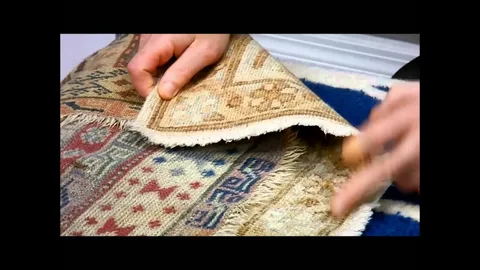
- Flip it over: The back of a hand knotted rug mirrors the front. You should see the individual knots clearly. If the back is covered in fabric or glue, it is not hand knotted.
- Check the detail: Look closely at the pattern. If the curves are smooth and the details are sharp, you are looking at a high knot count.
- Feel the pile: Press your fingers into the rug. A high-quality knotting job results in a dense pile that pushes back against your hand. It should not feel loose or sparse.
- Look for irregularity: Perfect symmetry is the mark of a machine. Slight variations in the pattern or the width of the border indicate a human hand created it.
Whether you need a statement piece for a living room or a durable runner for a hallway, focusing on the construction technique ensures you get value for your money.
The Final Thread
The quality of a rug starts and ends with the knot. The technique determines the design, the density determines the clarity, and the material determines the longevity. When these elements align under the hands of a skilled artisan, the result is a floor covering that serves your home for a lifetime.
If you are ready to find a piece that brings style and authenticity to your space, we invite you to view our collections. From bespoke designs to ready-to-ship pieces, we offer the finest Handmade Rugs in India.
Visit The Ambiente today to find the perfect foundation for your room.
